

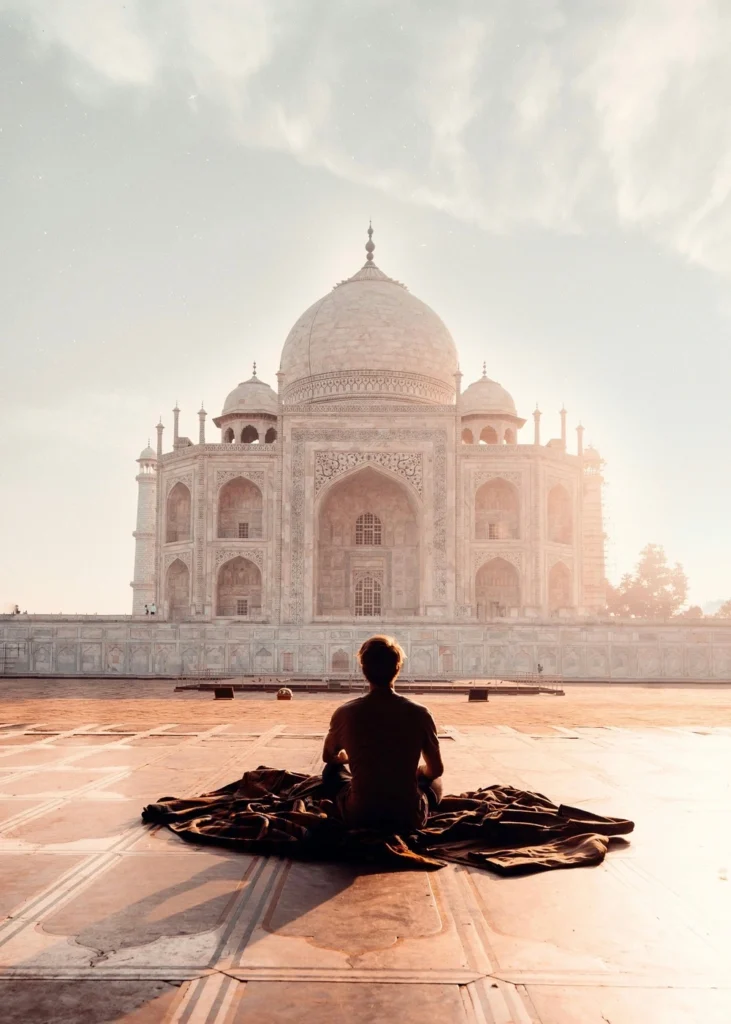
Quick answer
For a first trip to India, pick one region: the Golden Triangle of Delhi, Agra and Jaipur takes 5 to 7 days, and October to March is the comfortable season for the north and the beaches. Most English-speaking visitors can apply online for an e-Tourist Visa at least four days before arrival. See our 6-day Golden Triangle tour.
In this guide 11 sections
- 1. Plan Your Route Around the Season
- 2. Get Your Visa Sorted
- 3. Expect Some Culture Shock
- 4. Dress Smart and Respect Local Customs
- 5. Stay Healthy: Food, Water and Hygiene
- 6. Master the Art of Bargaining
- 7. Getting Around: Trains, Tuk-Tuks & Uber
- 8. Stay Safe, But Don’t Be Overly Paranoid
- 9. Visiting the Taj Mahal: Timing and Rules
- 10. Leave Room for the Unexpected
- Frequently asked questions
Below are the essentials we share with every first-time visitor, from visas and health to getting around.
We plan India trips for visitors from abroad as well as for Indian families. See our 6-day Golden Triangle tour or more India holidays.
1. Plan Your Route Around the Season
India is massive—we’re talking about a country with snow-capped mountains, deserts, beaches, and bustling cities, all in one. Trying to “see it all” in one trip? Not possible. Instead:
 Choose a region – North India (Delhi, Agra, Rajasthan) is great for history and palaces. South India (Kerala, Tamil Nadu) is perfect for nature and laid-back vibes.
Limit your stops – Traveling between cities takes time, so avoid overpacking your itinerary.
Leave room for surprises – Some of the best experiences happen unexpectedly. A local festival? A roadside chai break? A hidden temple? Priceless.
 Best Time to Visit & Weather Tips
India’s climate varies drastically depending on the region and season:
•North India (Delhi, Agra, Jaipur, Rajasthan, Varanasi) – October to March is ideal, with pleasant weather. Summers (April to June) can be extremely hot (35–45°C), making sightseeing challenging.
•South India (Kerala, Tamil Nadu, Karnataka) – November to February is perfect, with cooler temperatures. The monsoon (June to September) brings heavy rains.
•Himalayan Region (Ladakh, Himachal Pradesh, Uttarakhand) – May to September is best for trekking. Winters (November to March) bring heavy snowfall.
•Goa & Indian Beaches – November to March is the best time for sun and sand. Avoid the monsoon season (June–September)when the beaches are rough.

2. Get Your Visa Sorted
Most visitors from English-speaking countries can apply online for an e-Tourist Visa on the official Indian visa portal. There are three types: 30 days (two entries), one year and five years (multiple entries). Apply at least four days before you arrive. Fees depend on your passport: for many nationalities the 30-day visa costs US$25 from July to March and US$10 from April to June, plus a bank charge (fee list checked October 2026). Apply only on the official site; look-alike sites charge extra.
 Pro Tip: Double-check the entry rules and duration of stay based on your country. Some visas allow multiple entries, which is handy if you plan to hop to neighboring countries like Nepal or Sri Lanka.
 The traffic: Rules? Flexible. Lane discipline? Optional. But drivers know what they’re doing, so just go with the flow.
 The noise: Honking is a language here, and quiet streets are rare. If you’re sensitive to noise, earplugs can help.
 The food: Delicious but spicy—even when locals call it “mild.” Ask for “less spicy” if you’re not used to the heat.
 The stares: People might be curious, especially in rural areas. It’s usually harmless—just smile back!
 What to wear: Loose, breathable clothes are your best bet. For women, covering shoulders and knees is recommended, especially in temples. Men—shorts are fine in cities but less common in rural areas.
 Religious sites: Always carry a scarf or shawl to cover up when entering temples and mosques. You’ll also need to remove your shoes at most places of worship.
 Stick to bottled or filtered water – No tap water, even for brushing your teeth.
 Say no to ice in drinks – Unless you’re sure it’s made from purified water.
 Carry hand sanitizer – Useful before meals, after handling cash, and everywhere in between.
 Start by offering half of the initial price and work your way up.
 Smile and keep it friendly—it’s a game, not a battle!
 If the vendor won’t budge, pretend to walk away—you’ll often get a “special price” to stay.
 Trains: Worth trying at least once, but book in advance. The AC classes (1AC, 2AC, 3AC) are best for comfort.
 Auto-rickshaws: Cheap, fun, and wild. Always negotiate the fare before hopping in.
 Keep an eye on your belongings – Pickpocketing can happen in crowded areas.
 Use Google Maps – If a tuk-tuk driver takes a “shortcut,” check that it’s legit.
 Avoid late-night solo walks in unknown areas – Especially if you’re a solo traveler.
 Best Time to Visit: Early morning to avoid crowds and catch the sunrise.
 Tickets: Foreign tourists have a separate entry line, which is quicker.


Frequently asked questions
When is the best time to visit India for the first time?
It depends on the region. October to March is best for Delhi, Agra, Jaipur, Rajasthan and Varanasi; April to June can reach 35–45°C. November to February suits Kerala and the south, and November to March suits Goa. The Himalayas are best from May to September.
Do I need a visa to visit India?
Yes. Most nationalities can apply for an Indian e-Visa online on the official site, indianvisaonline.gov.in. Apply at least a few weeks before you travel, and check the validity and entries offered for your nationality, especially if you plan a side trip to Nepal or Sri Lanka.
Is tap water safe to drink in India?
Drink only bottled or filtered water, and use it for brushing your teeth too. Avoid ice unless you know it is made from purified water. Eat food that is freshly cooked and served hot, and carry hand sanitiser for meals on the go.
What should I wear when travelling in India?
Loose, breathable clothing works best in the heat. Women should cover shoulders and knees, especially at temples. Carry a light scarf or shawl for temples and mosques, and expect to remove your shoes at most places of worship and on the Taj Mahal’s marble platform.
What is the best way to get around India?
For long distances, trains are worth trying, but book well ahead and choose an AC class (1AC, 2AC or 3AC) for comfort. In cities, ride-hailing apps such as Uber or Ola are easiest. If you take an auto-rickshaw, agree the fare before you get in.