
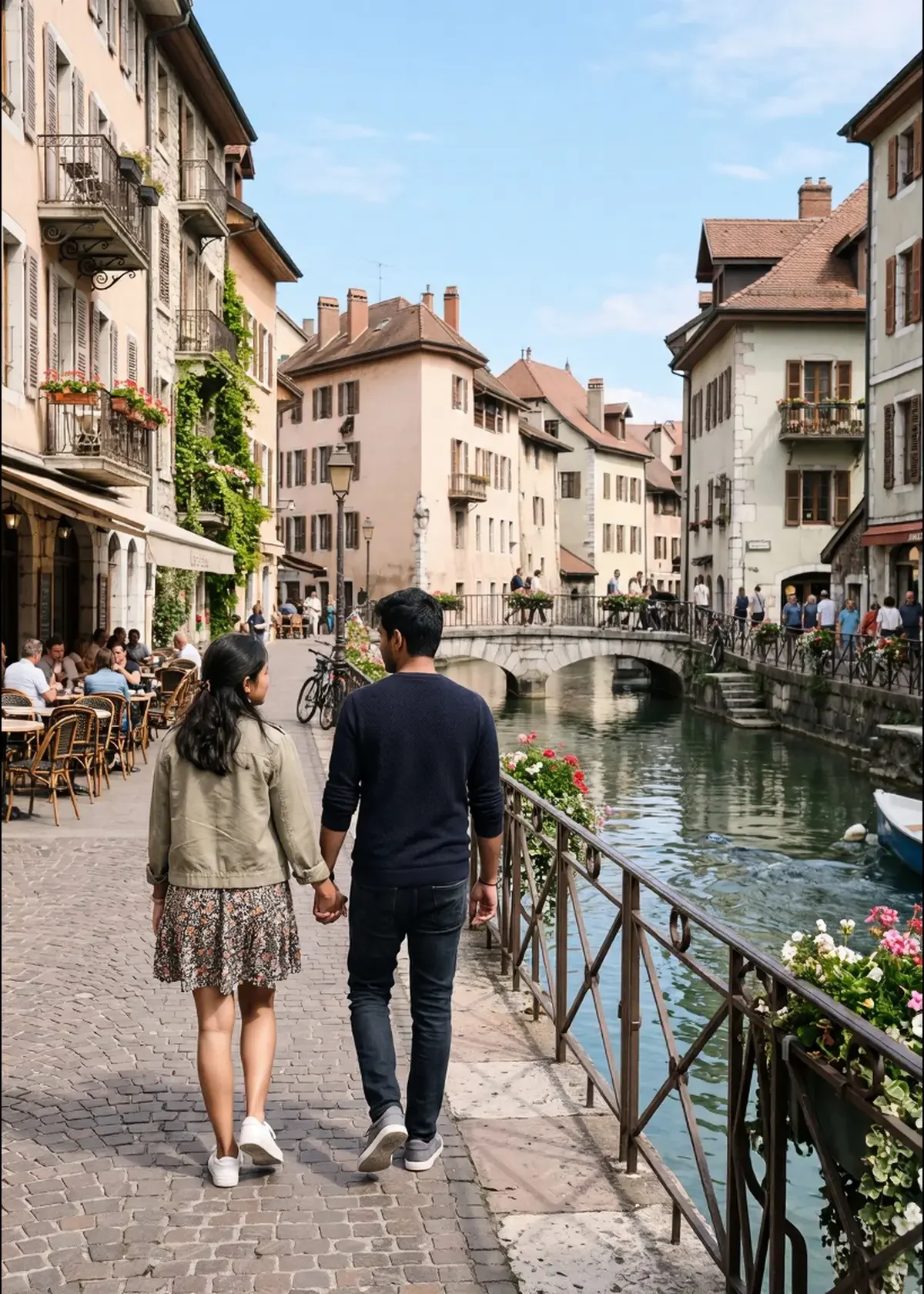
Two couples can come back from Europe and both say the same thing: “We spent around 5 lakh.” One stayed a ten-minute walk from the Eiffel Tower and took trains between cities. The other stayed twenty minutes outside every centre, flew between countries to save time, and quietly ran up cab fares to and from airports. Same number. Completely different trip.
That’s the real question hiding inside “how much does a Europe trip cost.” It isn’t a fixed number waiting to be looked up, it’s a set of decisions, and each one moves the total more than people expect. This is for couples, honeymooners included, working out what a Europe trip for two will realistically cost in 2027, and more importantly, which choices actually drive that number.
A realistic starting range
For a first-time, 8 to 10 day trip covering two or three countries, most Indian couples spend somewhere between roughly ₹4 lakh and ₹7 lakh for two people, everything included: flights, visa, hotels, local travel, food, and sightseeing. Premium honeymoon-style trips can run higher.
That’s a wide range on purpose. Anyone giving you a single number without asking about your dates, cities, or hotel preferences is guessing. What follows is where that number actually comes from.
Flights: the one cost that moves the most on its own
Flights are usually the single largest, most unpredictable line item, often ₹35,000 to ₹70,000 per person round trip depending on season, booking lead time, and which city you fly into. Flying into one city and out of another (an “open-jaw” ticket) can save a return journey across the continent, sometimes offsetting a slightly higher airfare.
There’s no single magic booking window. Fares firm up as a date gets closer, and peak-season travel (summer, Christmas, New Year) pushes prices up across the board simply because demand is higher. If your dates are flexible, shifting by a couple of weeks either side of peak season often matters more than the exact day you hit “book.”
Visa and travel insurance
For most Schengen destinations, the standard visa fee is €90 for adults, and visa centre service fees can add around €30 to €50 per application, so you can expect to pay roughly €120 to €150 per person, before travel insurance. Treat these as current reference points, not locked-in 2027 numbers, since fees are set by regulation and the euro-to-rupee rate moves on its own timeline, so check both before you apply.
If your itinerary includes multiple Schengen countries, you generally apply through the consulate of the country where you’ll spend the most nights, or your first point of entry if the nights are evenly split, a detail that affects paperwork more than cost but causes last-minute stress if discovered too late.
Where you sleep changes more than your hotel bill
A hotel two minutes from a city’s main square costs more per night than one twenty minutes out, but the “cheaper” outer hotel often isn’t cheaper once you add up the metro rides, the extra time each way, and the taxi back after a late dinner when the trains have stopped.
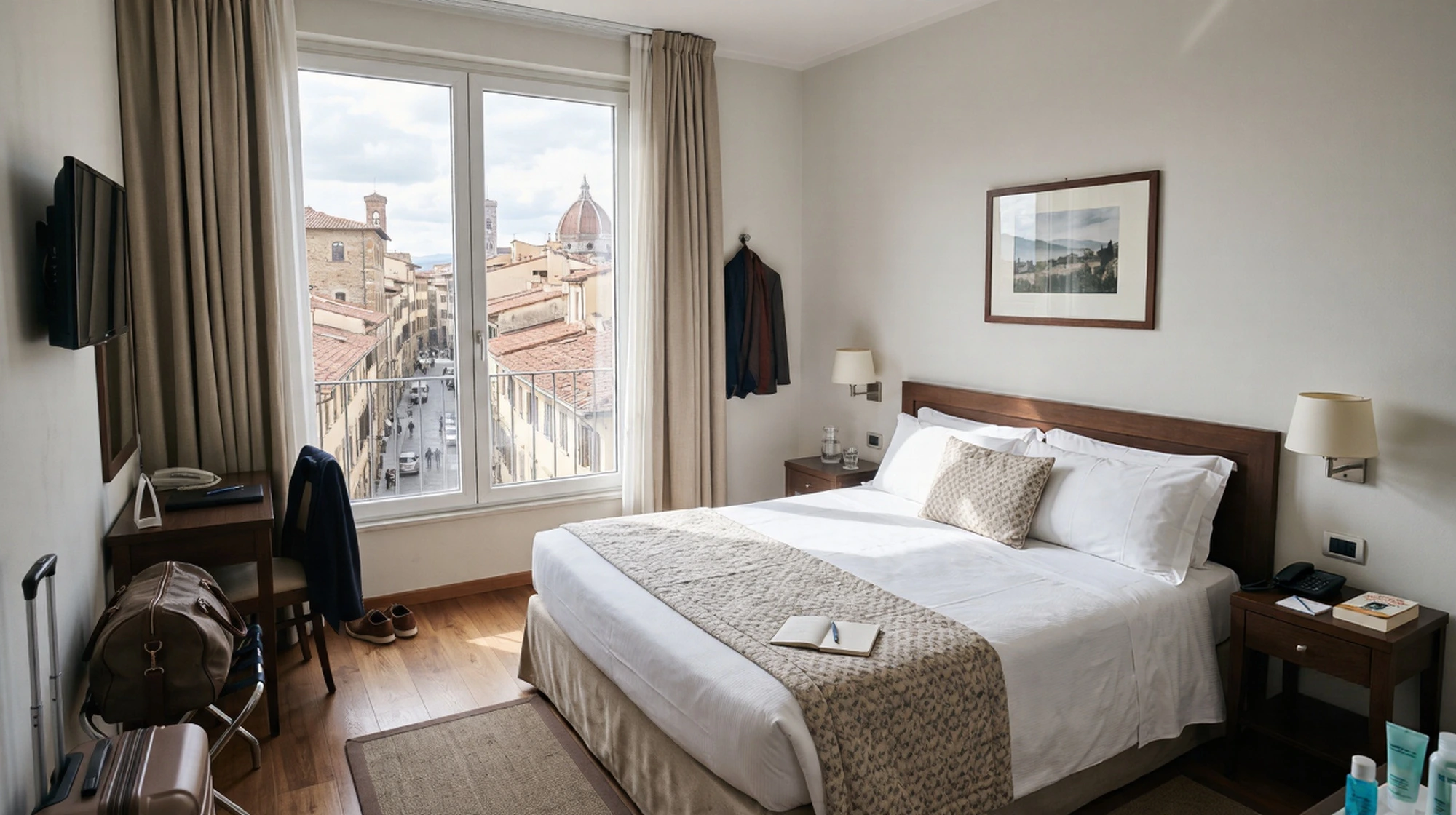
For a short stay of three or four nights, paying more to be central is usually worth it since you get back the time you’d otherwise lose commuting. For longer stays of five nights or more in one base, staying slightly outside the centre can genuinely save money once you’ve settled into the transit rhythm. For honeymoon travel, this is usually where it’s worth spending more, since a better-located or better-view room tends to leave a stronger memory than a fancier meal or an extra paid attraction.
Adding a country sounds smaller than it actually is
“We’re already doing Paris and Switzerland, so let’s just add Italy too” is one of the most common ways a Europe budget quietly grows. It sounds like one more stop, but it’s really another hotel check-in and check-out, another train or short flight, often another transfer, and, since your trip length rarely grows to match, less time in each place.
A 10-day trip split across two countries gives you real time to settle into each one. Split the same 10 days across four and you’re mostly seeing train stations and hotel lobbies. The cost doesn’t just go up because of extra transport tickets, it goes up because you end up paying full stay costs, taxis, city taxes, and tourist-area meals for shorter and shorter windows in each place. A customised itinerary earns its keep exactly here, working out how many countries your actual number of days can comfortably support, rather than fitting a wish list into a fixed number of nights.
Getting around inside Europe
Trains between neighbouring cities (Paris to Amsterdam, Zurich to Milan) are often the most comfortable option, arriving in city centres rather than out-of-town airports, and booking once your dates are fixed usually gets better fares than buying on the day. Budget flights between countries can look cheap but add hidden cost, a secondary airport, baggage fees, another security line, so a well-timed train often works out better. Inside a city, a multi-day transport pass is usually simplest. Private transfers cost more but remove the guesswork on a travel day with luggage in an unfamiliar metro.
Food: the expense that’s easiest to control
This is one of the more flexible parts of a Europe budget, and it’s a couple’s habits, not the destination, that decide the final number. A bakery breakfast, a casual lunch, and one sit-down dinner is a completely normal, enjoyable way to eat in most European cities, at a fraction of what tourist-area restaurants charge for every meal. Save the higher-end dining for a couple of standout evenings, and the savings across a 10-day trip add up without the trip feeling any less special.

Sightseeing and experiences
Some of the best things to do in Europe cost nothing: walking a neighbourhood, sitting by a canal, watching a city wake up. Paid attractions are worth it selectively, for the two or three things you’d genuinely regret missing. Private guided tours and curated experiences, a wine tasting outside Florence, an evening river cruise, are where couples often choose to spend more, since these tend to be the moments remembered years later. Pick two or three that matter rather than stacking every option onto the itinerary.
Three ways the same 9 day trip can look
Here’s how a similar 9-day, two-country trip (say, France and Switzerland) might look at three comfort levels. These are indicative planning ranges, not fixed prices.
| Value-conscious | Comfortable mid-range | Premium | |
| Flights (per person) | Economy, standard booking | Economy, better timing/route | Economy plus or better routing |
| Hotels | Well-reviewed 3-star, slightly outside centre | 4-star, centrally located | 4-star or boutique, prime location |
| Local travel | Public transport, train between cities | Train between cities, occasional taxi | Train (higher class) or private transfers |
| Food | Bakery/casual meals, one nice dinner every few days | Casual meals with regular sit-down dinners | Regular sit-down dining, a few special dinners |
| Sightseeing | Free activities, 2-3 paid attractions | Several paid attractions, one guided experience | Paid attractions plus 2-3 curated private experiences |
A value-conscious version generally lands toward the lower end of the overall range mentioned earlier, mid-range sits in the middle, and a premium version, especially a honeymoon, can comfortably exceed it. The point isn’t to tell you which is “right,” it’s to show that the difference between these three is a consistent set of choices repeated across every category, not one or two expenses.
Where to save, where not to, and common mistakes
Save on everyday meals, mid-range hotels for longer stays away from the centre, standard-class trains, and paid attractions that don’t genuinely interest you. Spend more on location for short city stays, one or two standout experiences per destination, and comfortable transfers on arrival and departure days when you’re jet-lagged and in no mood to navigate unfamiliar transport with luggage. Keep aside roughly 10 to 15 percent of your budget for the unplanned stuff, a delayed-train taxi, an extra meal, something bought along the way. Couples who budget down to the last rupee tend to find this the most stressful part of an otherwise good trip.
The most common mistake is pricing a trip on flights and hotels alone, then being surprised by how much daily transport, city taxes, and small purchases add up to over 9 or 10 days. A close second is adding a country late without adjusting the number of days, quietly turning a relaxed itinerary into a rushed one. A third is booking the cheapest hotel without checking how far it is from where you’ll spend your time, only to realise the savings disappeared into taxi fares.
Package or independent planning
A straightforward one or two-city trip with plenty of lead time is manageable to plan yourself. Once multiple countries, a fixed number of days, centrally located hotels, and transfers all come into play, a customised holiday package tends to save both money and planning stress. The value isn’t in handing over decisions, it’s in having someone map the route, days, and hotel locations against each other before you commit.
Start with your total number of days and how many countries that can genuinely support, not the other way around. Get a realistic visa and insurance figure early, since it’s a fixed cost you can’t reduce, and treat flight and hotel choices as connected decisions rather than separate ones. The final number will still be a range, and it should be, since what matters is understanding which decisions move it, so the figure is one you chose rather than one you were surprised by.
Planning your next international holiday? Get in touch with Naviora Journeys for expert guidance and customised holiday packages tailored to your needs.
Frequently asked questions
How much does a Europe trip cost for Indian couples? For a first-time 8 to 10 day trip across two or three countries, most couples spend roughly ₹4 lakh to ₹7 lakh for two people in total, including flights, visa, hotels, food, local travel, and sightseeing.
What is a realistic Europe honeymoon budget? Similar to a standard couple’s trip at the lower end, but honeymoon travellers often spend more on hotel location and category, plus one or two private or curated experiences, which can meaningfully raise the total with a typical budget of around ₹5 lakh to ₹9 lakh for two.
When is the off-season in Europe? May to October is generally considered the peak travel season in Europe, while November to April is the off-season. However, this can vary by destination and weather conditions.
How much cheaper is Europe during the off-season? During the lean season from November to April, Europe can be around 15% to 20% cheaper, especially in destinations in Central Europe such as Switzerland and nearby countries. Actual savings vary depending on flights, hotels, dates, and the specific destination.