
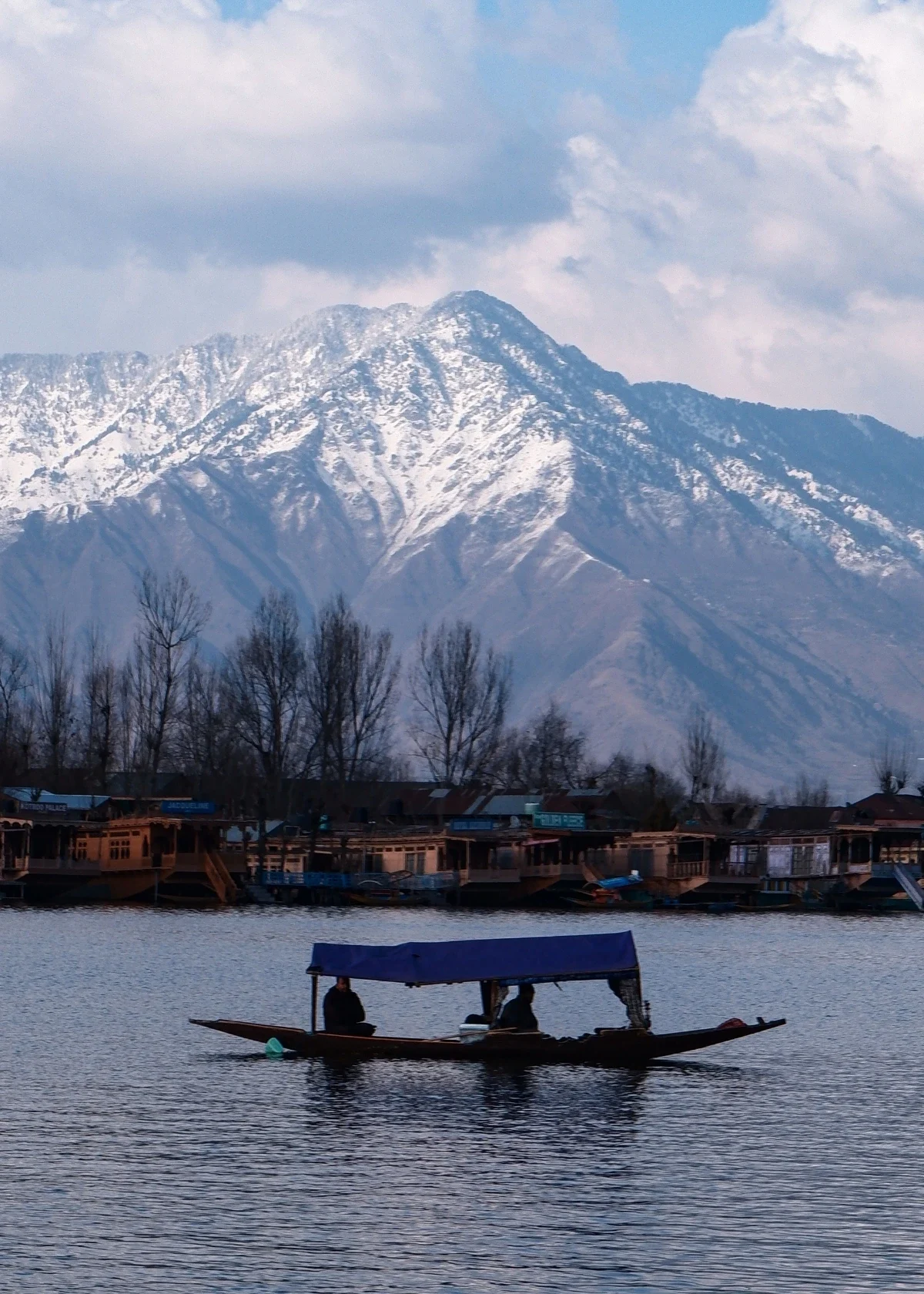
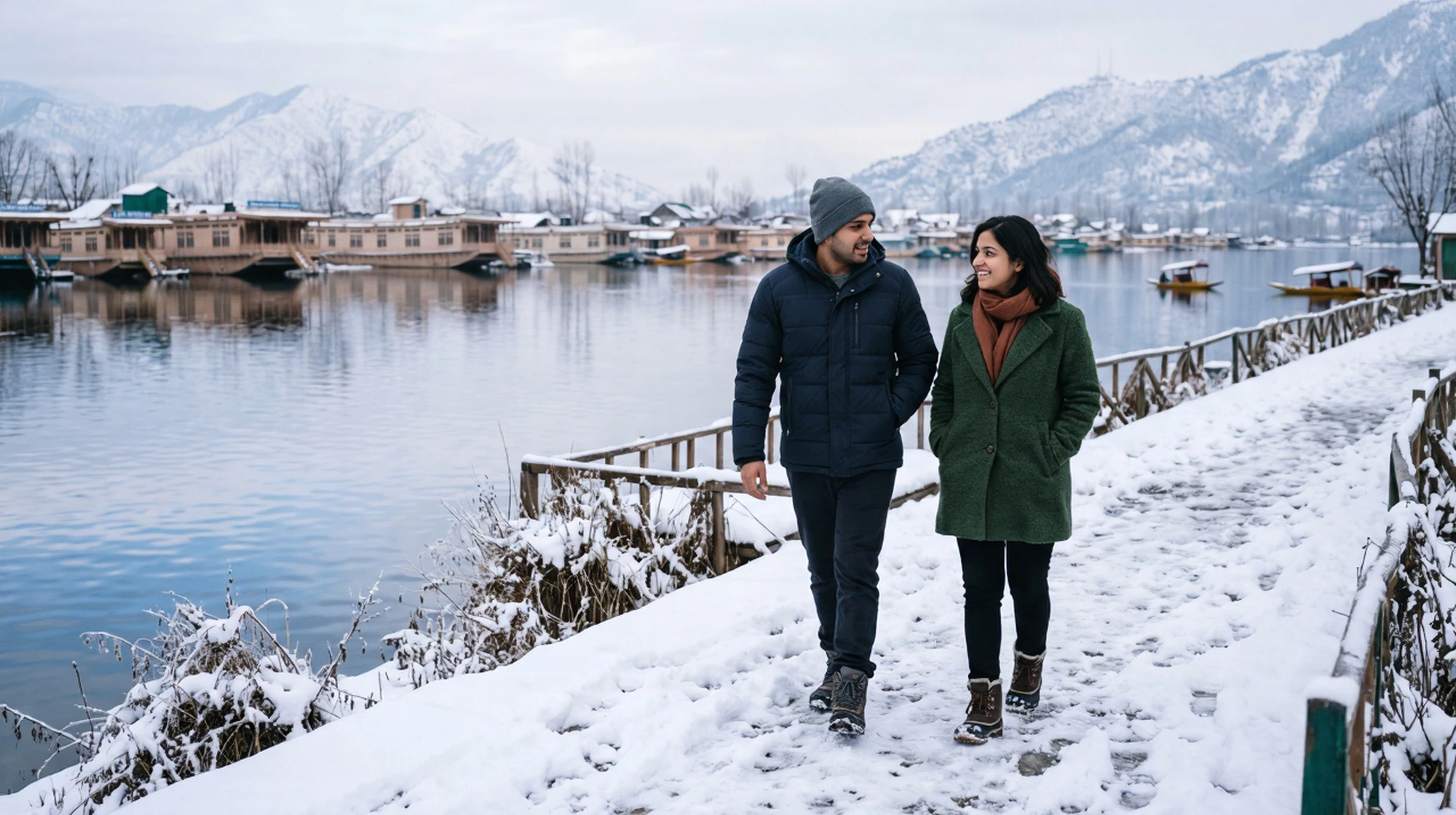
You’ve probably seen the photographs: snow piled on houseboat roofs, Dal Lake half frozen, pine trees bent under fresh powder. What they don’t show is whether you’ll be shivering through a heating failure at midnight, or whether the road to Gulmarg will even be open that day. If you’re trying to work out the best time to visit Kashmir for a winter trip, the honest answer depends less on a calendar date and more on what you’re willing to trade for the cold. Snow isn’t guaranteed on any single day, houseboats vary in how well they handle sub-zero nights, and an itinerary built entirely around one activity can fall apart fast. This piece is about making that call with open eyes, not selling you on paradise.
Is Winter Kashmir Actually Worth It?
Winter changes Kashmir’s character. Houseboats sit quieter on a half-frozen Dal Lake, the gardens lose their crowds, and Gulmarg turns into a genuine snow-sports destination instead of a meadow you walk through.
The trade-offs are real too. Daylight runs out by around 5 PM in December, Srinagar nights regularly drop below freezing, and some gardens, shikara routes, and viewpoints operate on reduced hours depending on conditions. Snowfall itself is unpredictable enough that a trip planned around “seeing snow fall” can disappoint even when the ground is already white.
Winter suits travellers who want a slower, quieter Kashmir and don’t mind adjusting plans on short notice, plus skiers heading specifically to Gulmarg. It’s a harder sell for anyone wanting guaranteed sunny days or a rigid schedule. If that’s you, spring or early autumn will likely serve you better.
When Should You Go for Snow? Kashmir in December vs Kashmir in January
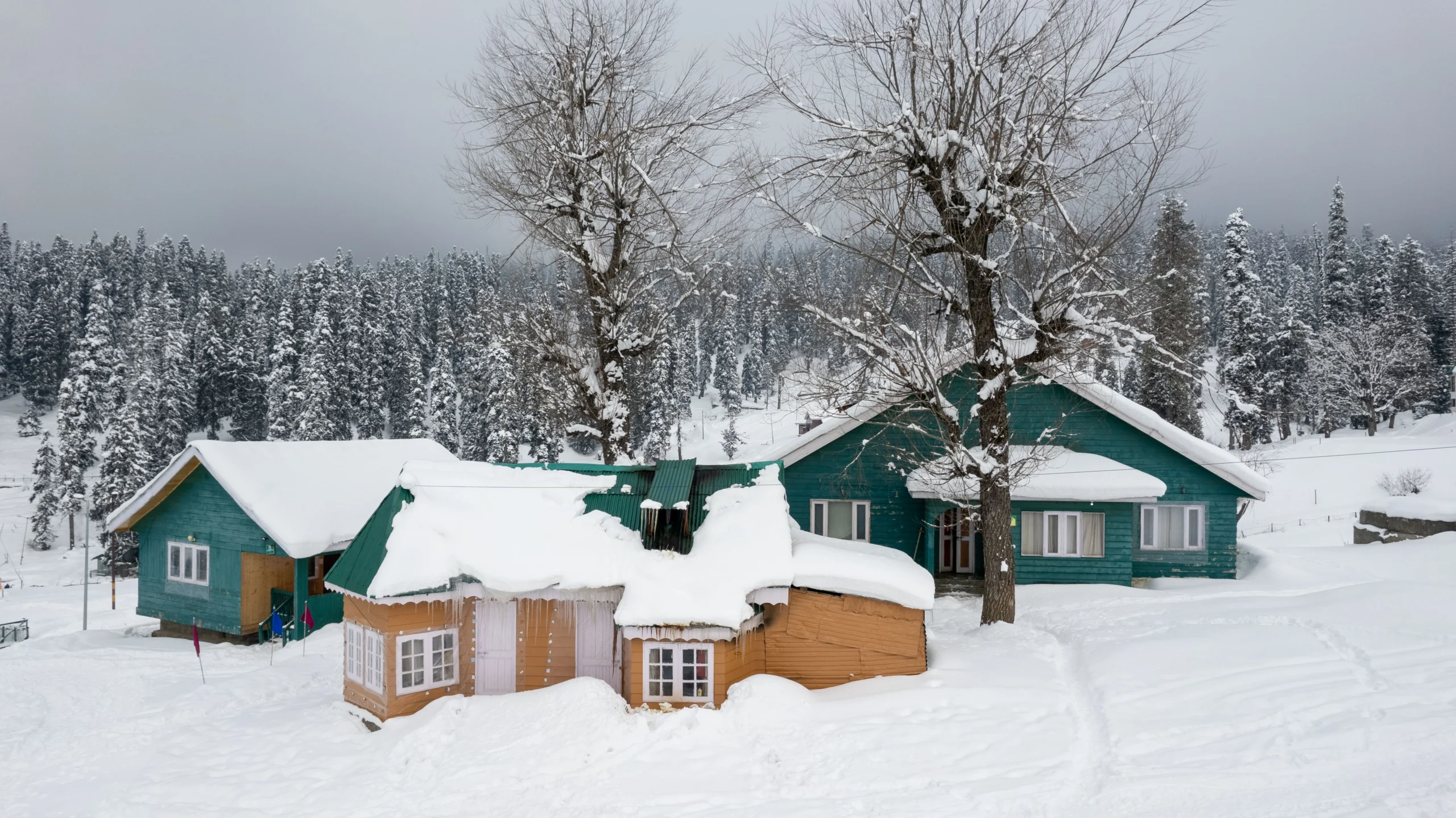
Kashmir’s harshest stretch, Chillai Kalan, runs December 21 to January 30. This is when snowfall is most frequent and temperatures fall lowest, making it the closest thing to a defined answer to the best time to visit Kashmir for snowfall. But “most frequent” isn’t “guaranteed on your dates,” and that distinction matters more than most guides admit.
Kashmir in December starts milder and gets colder through the month. Early December can still show green patches alongside first snow; by the third week, both Srinagar and Gulmarg turn firmly wintry. Kashmir in January sits deeper inside Chillai Kalan for most of the month, with Srinagar nights commonly dropping to minus 3°C to minus 6°C or lower, and Gulmarg colder still. Snow cover tends to be more established by mid-to-late January, though years vary. February, once Chillai Kalan ends, moves into the milder Chillai Khurd phase, with cold persisting at lower intensity.
| Factor | Kashmir in December | Kashmir in January |
| Temperatures | Mild early, sharply colder from week three | Coldest month, frequent sub-zero nights |
| Snow cover reliability | Building through the month | Generally more established, especially mid-month on |
| Crowd levels | Busier around Christmas/New Year | Quieter outside the first week |
| Gulmarg conditions | Improving snow base | Best skiing conditions for most years |
| Sightseeing comfort | Manageable early, harsh by month-end | Demanding throughout |
None of this guarantees fresh Gulmarg snowfall on your exact travel days. Snow arrives in spells, not on a fixed schedule, so someone travelling early January might hit a dry, clear stretch while another two weeks later gets snowed in. Treat these months as probability windows, not promises.
Gulmarg or Srinagar: Where Does the Snow Experience Actually Happen?
Srinagar in winter has its own atmosphere: a partly frozen Dal Lake, quieter houseboats, wazwan meals that feel especially good in the cold, and gardens that are pretty but not snow-heavy at lower elevation. It’s a reasonable base, but not primarily where you go chasing snow.
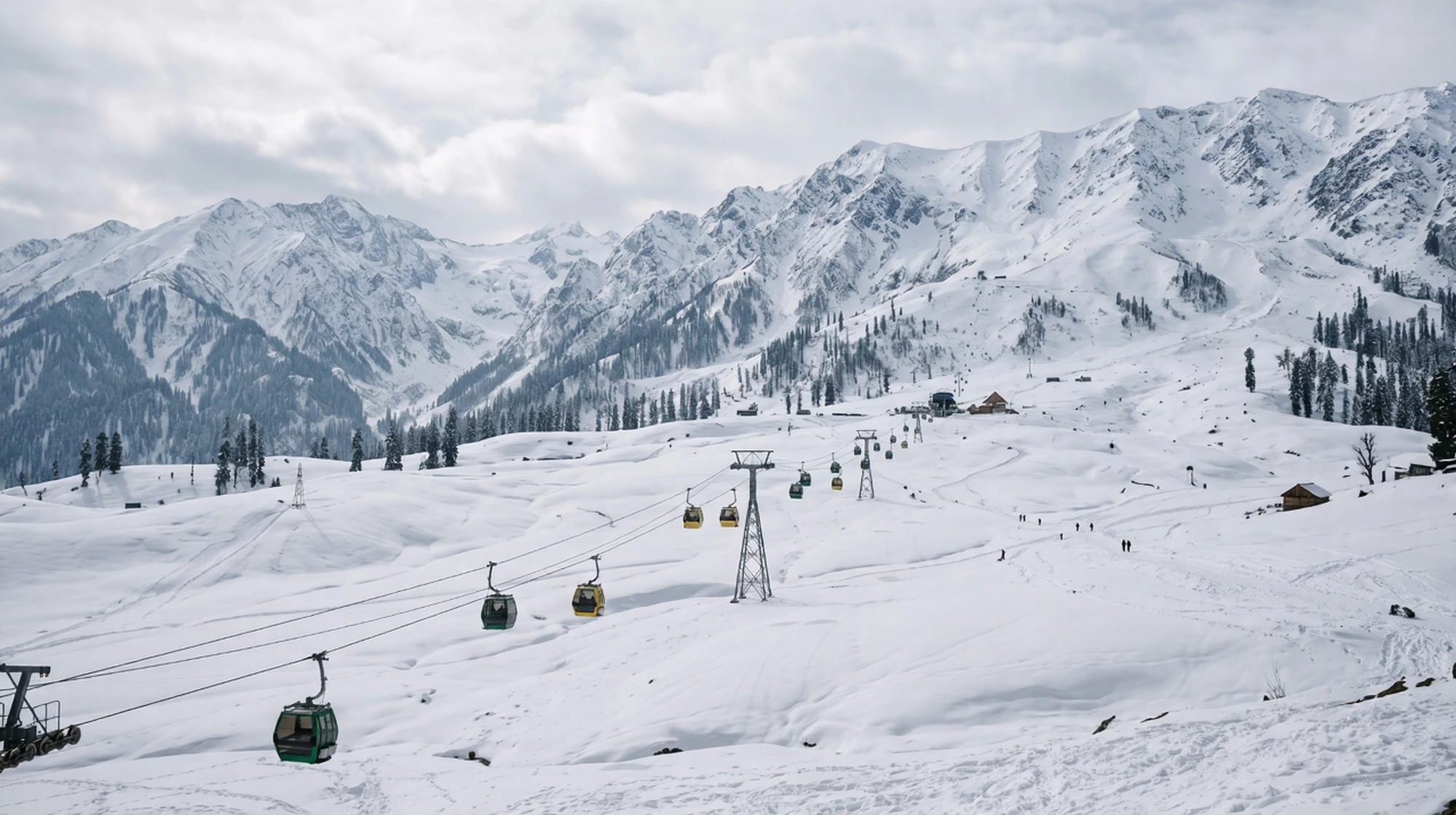
Gulmarg, sitting much higher, is where the snow-focused experience actually lives: skiing, snowboarding, sledging, and the Gulmarg Gondola, which typically runs in two stages for progressively wider views and deeper snow. It operates on published winter timings and can close for maintenance or heavy snowfall and poor visibility. Queues can also eat into your day.
This is the core planning trap: checking Srinagar’s weather and assuming Gulmarg looks the same. It often doesn’t. A clear morning in Srinagar can mean an actively snowing, wind-whipped Gulmarg ninety minutes away, or the reverse. If snow is the priority, build flexible days around Gulmarg rather than the city, and check same-week conditions rather than relying on the month alone. Pahalgam and Sonamarg are worth a stop with extra days, but shouldn’t replace Gulmarg if winter snow is the goal.
Is a Kashmir Houseboat Comfortable in Winter? The Real Question
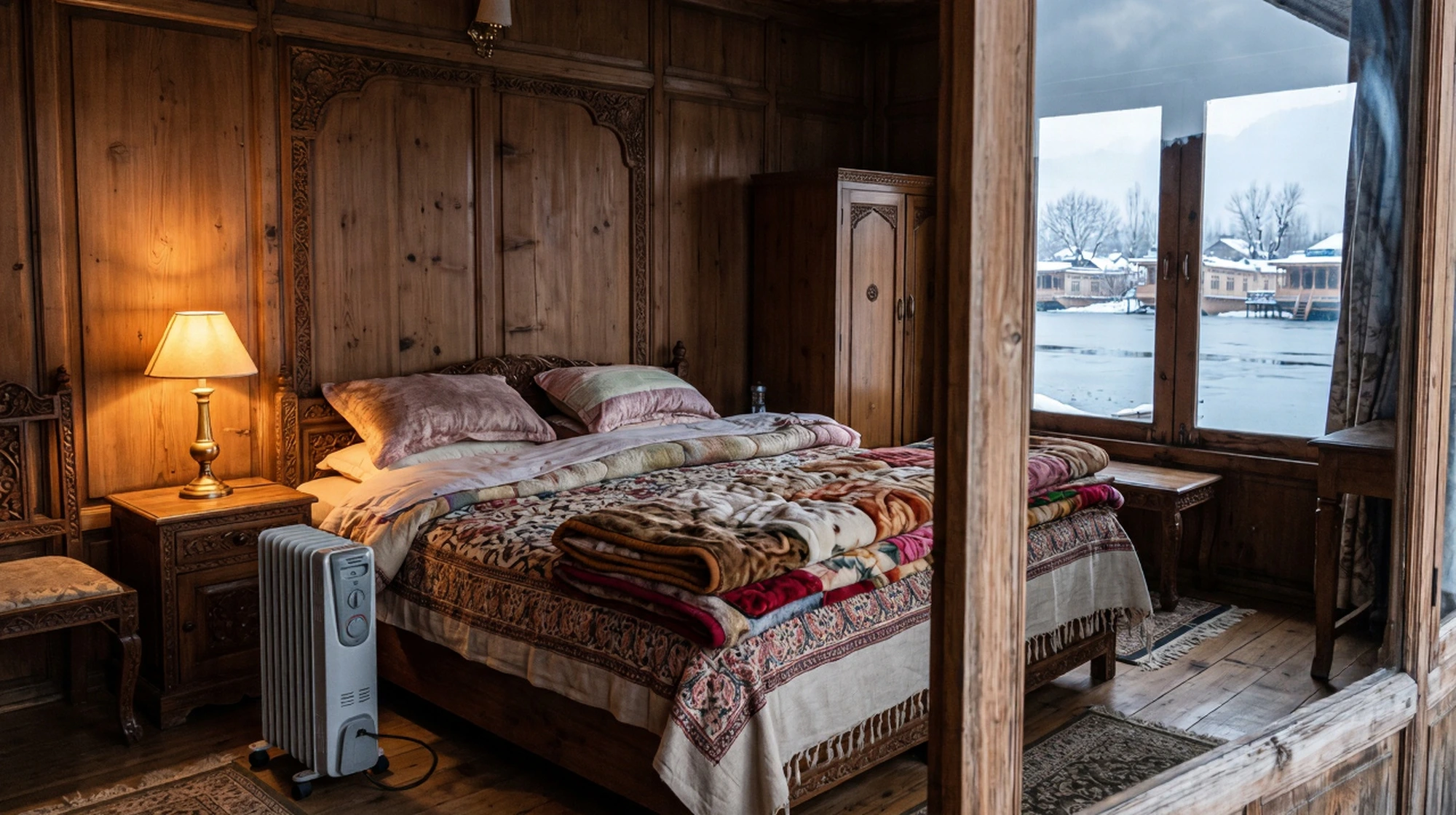
This is where most winter planning goes wrong, because the appeal of a Kashmir houseboat is strongest in the imagination and most tested during December and January nights.
Houseboats aren’t uniform. Some have proper electric heating or bukharis running through the night; others heat common areas well but leave bedrooms cold once staff turn in. Hot water can depend on a boiler schedule rather than being on demand. Bedding, window insulation, and how well a boat handles the damp lake cold all vary, even within the same price bracket.
Before booking, ask the property directly:
- Is bedroom heating available all night, or only until a set hour?
- Is hot water on demand, or at fixed times?
- What type of heater is used, and is it safe for unattended overnight use?
- How many blankets are provided, and can extra ones be arranged?
- Has the boat been winterized, or is it set up mainly for warmer months?
There’s a genuine trade-off here. A well-heated hotel in Srinagar will almost always be warmer and more predictable at night, since hotel heating systems are usually more consistent. A houseboat offers something a hotel can’t: waking up on Dal Lake with mist over the water. Many couples and families split the stay, spending one or two nights on a houseboat for the experience and the rest in a heated hotel for reliable comfort, rather than betting the whole trip on one property’s winter setup.
Winter Kashmir for Couples and Families
For Couples and Honeymooners
Winter’s quieter pace suits couples wanting time together over a packed sightseeing list. For couples planning a winter honeymoon, Kashmir can be one of the best places for honeymoon in December, especially for those drawn to snowy landscapes, cozy stays and a slower pace. A houseboat night, a slow Srinagar morning, and a crowd-free Gulmarg day can work well. The risk with many Kashmir honeymoon packages is an itinerary built around photographs rather than realistic winter logistics: multiple long transfers in one day, activities with no weather buffer, or a houseboat booked purely for its look without confirming heating. Ask what happens to the plan if a day’s activity gets snowed out, not just what the brochure promises on a clear day.
For Families with Children
Children tolerate cold differently than adults, and shorter daylight compresses what’s realistically doable in a day. Proper thermal layers, waterproof boots, and built-in rest breaks matter more than an ambitious list. Avoid anchoring the whole trip to one snow-dependent activity on a single fixed day; if the gondola closes for weather that day, the rest of the trip needs to still feel worthwhile. A flexible day built in for exactly this matters more than squeezing in one more destination.
What Does a Winter Kashmir Trip Actually Cost?
Kashmir trip cost in winter is shaped by several variables, and current package rates change often enough that quoting figures here would be unreliable. What’s worth understanding is what drives the cost:
- Flights to Srinagar, which can spike around Christmas, New Year, and school holidays.
- Accommodation category, and whether a property charges extra for confirmed round-the-clock heating.
- Local transfers between Srinagar and Gulmarg, longer and costlier when roads are poor.
- Gulmarg costs: gondola tickets per phase, equipment rental, instructor fees, sledging.
- Meals, sightseeing entry, and optional shikara rides.
- A contingency buffer for delayed flights or road-closure disruptions.
When comparing Kashmir tour packages or Kashmir winter tour packages, the headline price rarely tells the full story. Check whether Gulmarg activities and equipment are included or extra, whether transfers are private or shared, whether heating is standard or a paid upgrade, and what the cancellation policy looks like. Similarly priced packages can differ substantially once inclusions are compared.
Practical Planning: What to Prepare For
- Layer with thermals, a fleece or wool mid-layer, and a windproof, insulated outer jacket rather than one heavy coat.
- Waterproof, insulated footwear matters more in Kashmir’s wet snow than in dry powder.
- Check flight status and road conditions the day before travelling to or from Gulmarg.
- Keep at least one buffer day rather than scheduling everything back to back.
- Confirm heating arrangements in writing before paying any advance.
- Review cancellation and rescheduling terms before booking.
- Carry essential medicines and appropriate travel insurance.
- Expect snow-covered scenery as the baseline, and treat active snowfall as a bonus, not a certainty.
So, Is Winter Kashmir Worth the Cold?
There isn’t one universal answer, and anyone promising a guaranteed snowy honeymoon or a fixed best month is skipping the honest part. If snow and skiing are the priority, build the trip around Gulmarg and stay flexible with dates rather than fixating on one month as the definitive best time to visit Kashmir. If comfortable sightseeing matters more, focus on accommodation heating and realistic transfer times over the calendar. Couples can weigh the atmosphere of a winter Dal Lake against guaranteed night-time warmth, and splitting a stay between houseboat and hotel often solves that tension. Families should plan around children’s cold tolerance and build in backup days rather than betting everything on one outing.
Winter Kashmir rewards travellers who plan for the cold rather than around it. Get the accommodation, transfers, and expectations right, and the season has a real case for being the best time to visit Kashmir if what you want is snow, quiet, and a version of the valley most visitors never see.
Wondering if Kashmir in winter is the right escape for you? Contact Naviora Journeys for expert guidance and customised holiday packages planned around your season, comfort and travel style.
Frequently Asked Questions
What is the best time to visit Kashmir for snowfall?
Late December through January, known as Chillai Kalan, sees the most frequent snowfall and coldest temperatures, making it generally the best time to visit Kashmir for snowfall. Even so, snowfall on your exact dates can’t be guaranteed months in advance.
Is Kashmir worth visiting in December?
Kashmir in December offers a milder start with snow building through the month, especially after December 21. It suits travellers wanting some winter atmosphere without January’s deepest cold, though early December may have less established snow cover.
Is Kashmir colder in January?
Yes, January typically falls within winter’s harshest stretch, with Srinagar regularly recording sub-zero nights and Gulmarg colder still. Kashmir in January generally has more reliable snow cover than early December.
Is a Kashmir houseboat comfortable in winter?
It depends entirely on the property. A well-winterised Kashmir houseboat with confirmed night-long heating and hot water can be comfortable; others suit warmer months better. Always confirm heating and hot water directly before booking.
Is Gulmarg suitable for families visiting Kashmir in winter?
Yes, as long as children are dressed properly and the itinerary allows for rest breaks and possible weather delays. It remains the main hub for Gulmarg snowfall and winter sports in the valley.
How many days are enough for a winter Kashmir trip?
Five to seven days generally covers Srinagar and Gulmarg without over-packing the schedule, while leaving at least one buffer day for weather disruption. Shorter trips work but leave little room if a Gulmarg day is lost to closure.